

Private Label vs. White Label Eyewear: Which Manufacturing Model Suits Your Brand?
Private Label vs. White Label Eyewear: Which Manufacturing Model Suits Your Brand?
Introduction
In the competitive eyewear markets of the USA, UK, and Europe, establishing a unique brand identity is no longer optional; it is essential for survival. Simply listing products is rarely enough to capture the attention of sophisticated fashion buyers or consumers. However, many startup founders and procurement managers confuse Private Label with White Label, leading to supply chain strategies that don't align with their business goals.
This guide breaks down the critical differences in costs, lead times, and customization levels between these two manufacturing models. By understanding these distinct approaches, you can make an informed decision that secures your brand’s profitability and long-term growth.

What is White Label Eyewear?
Definition & Process
White Label eyewear refers to a process where you purchase pre-manufactured, existing products from a factory's catalog. The process is straightforward: you select a frame that has already been designed and produced, and the manufacturer prints your brand logo on it before shipping. Essentially, you are putting your label on a generic product that is likely available to other sellers.
Pros & Cons
The primary advantage of this model is the low Minimum Order Quantity (MOQ), which lowers the barrier to entry for new businesses. It also offers a fast time-to-market, allowing you to launch a collection in weeks rather than months.
However, the downsides are significant for brands aiming for longevity. Because the product lacks uniqueness, you face high market competition and cannot build a "moat" around your brand design. You are competing strictly on marketing and price, rather than product innovation.
Best For
White Label is best suited for e-commerce startups or influencers who need to test the market with limited budgets. It serves as a low-risk entry point but offers limited potential for brand differentiation.
What is Private Label Eyewear?
Definition & Customization Levels
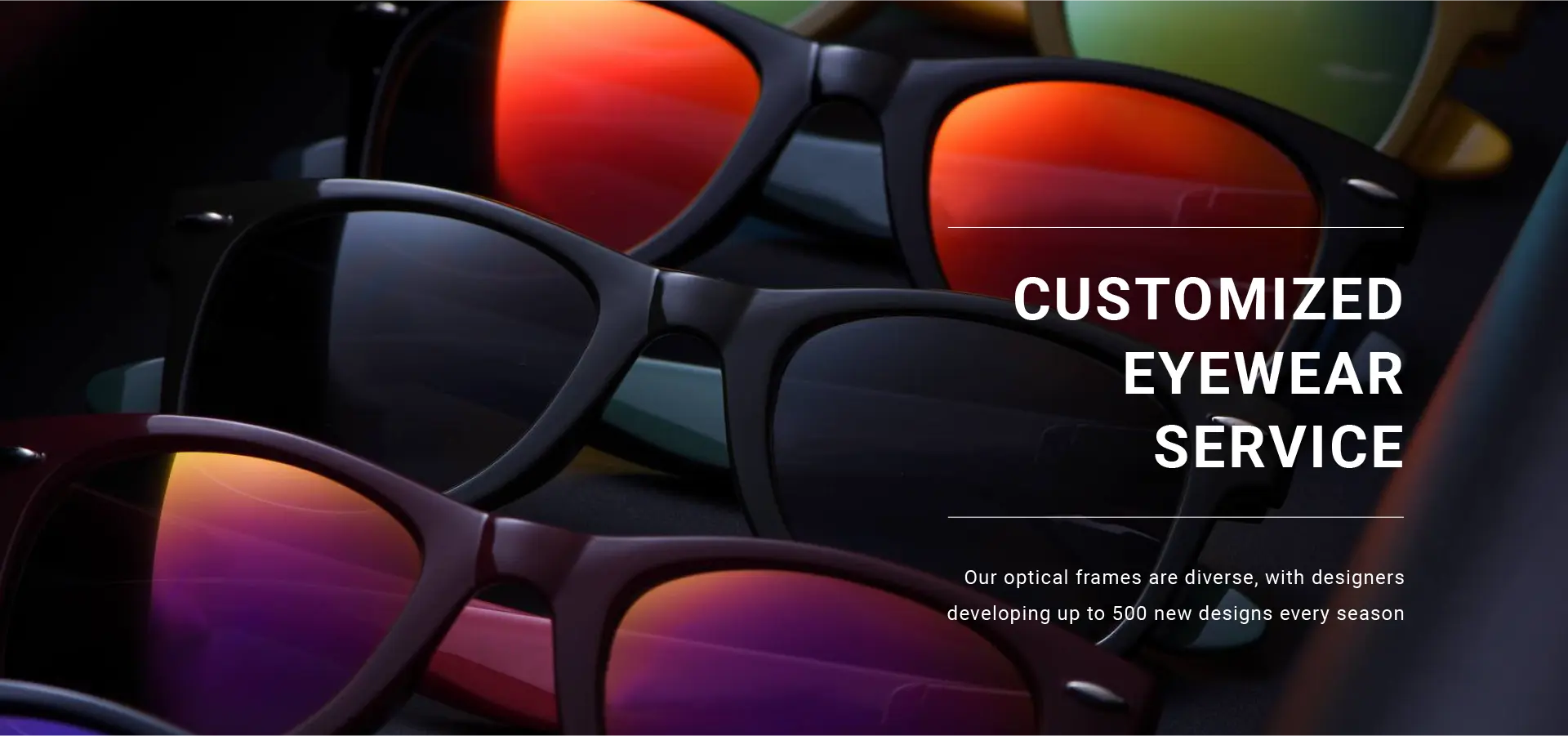
Private Label (often referred to as custom or OEM manufacturing) involves deep customization where you control every aspect of the product. From the initial design sketches and mold creation to the selection of specific hinges, materials, and custom packaging, the product is created exclusively for your brand.
The Strategic Advantage
In mature markets like the EU and USA, exclusivity is a key driver of high profit margins. Private Label manufacturing allows you to create signature silhouettes and unique colorways that competitors cannot replicate. This uniqueness becomes your brand's strongest asset.
Pros & Cons
The main benefits are higher profit margins and complete control over design rights, allowing you to accumulate genuine brand assets. Conversely, this model requires a higher MOQ and a longer lead time for development and production.
To summarize, while Private Label demands a greater upfront investment in time and capital, it provides the foundation for a sustainable, high-value fashion brand.
Key Differences at a Glance
When choosing between these models, you must weigh four critical factors:
Customization: Private Label offers 100% creative freedom, whereas White Label is limited to logo placement.
Lead Time: White Label is rapid (weeks), while Private Label requires months for prototyping and production.
Cost Structure: White Label has lower initial costs but higher per-unit costs; Private Label requires tooling fees but offers better unit economics at scale.
Scalability: Private Label is highly scalable for brand building; White Label is difficult to scale without competing on price.
Ultimately, the choice depends on whether your priority is speed (White Label) or brand equity (Private Label).
Critical Factors When Choosing a Manufacturer
MOQ Requirements
When engaging a manufacturer for Private Label projects, be prepared for transparent discussions about MOQ. These thresholds are necessary to amortize the costs of setting up custom production lines and sourcing specific raw materials. Understanding this ensures you don't waste time negotiating with factories that don't fit your current scale.
Compliance & Certifications (FDA, CE, UKCA)
For B2B buyers in Europe and America, regulatory compliance is non-negotiable. Ensure your manufacturer can provide valid certifications such as FDA, CE, and UKCA. This protects your business from legal risks and customs seizures, demonstrating professionalism to your customers.
Material Sourcing & Sustainability
Sustainability is a growing requirement in Western markets. Ask potential partners about their access to eco-friendly materials, such as Bio-acetate. A manufacturer capable of sourcing sustainable materials can be a powerful partner in elevating your brand story.
Why Experienced Brands Shift to Private Label
As brands mature, they almost inevitably transition from off-the-shelf solutions to custom manufacturing. Reliance on generic products eventually hits a growth ceiling where marketing alone cannot sustain sales.
Experienced brands seek a strategic partnership with their manufacturer rather than a simple transactional relationship. They need a factory that understands their design language and quality standards. Shifting to Private Label is the definitive step toward owning your market position and securing long-term loyalty.
Conclusion
Deciding between Private Label and White Label depends on your business stage and goals. White Label is often the starting point for testing ideas, but Private Label is the destination for building a lasting, valuable brand. By choosing the custom route, you invest in product quality and exclusivity that pays dividends in customer loyalty.
Ready to elevate your eyewear brand with exclusive designs? Contact us today to discuss your Private Label project, or download our latest catalog to explore our sustainable material options.